
The Psychology of Phishing Scams: Why Smart Fall for Phish

Table of Contents
Today, we are dismantling a dangerous myth: that falling for a phishing email is a failure of intelligence.
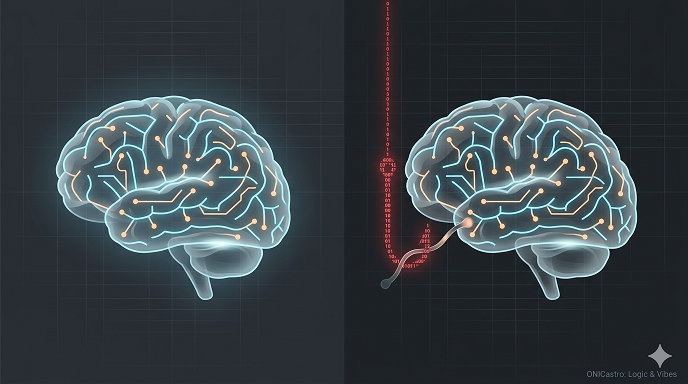
I have watched and often heard of brilliant people across diverse works of life – engineers, finance directors, even cybersecurity peers – momentarily bypass years of training. Why? Because scams do not attack your IQ. They attack your operating system – your brain’s automatic shortcuts for urgency, authority, and social conformity. Understanding the psychology of phishing scams is the first step toward true resilience.
Let us step out of shame and into structure. Here is the defensive psychology of phishing scams – why smart people get hooked – and how you can build a cognitive firewall against it.
1. The Cognitive Load Trap
Smart people are busy people. We operate under high cognitive load—juggling complex problems, tight deadlines, and the constant multitasking that defines modern professional life. In this state, your brain shifts from System 2 (slow, analytical, logical) to System 1 (fast, automatic, emotional). This shift is central to the psychology of phishing scams.
A scam email bypasses your defences precisely because you lack the mental bandwidth to scrutinise the “From:” address or the subtle irregularities in the message. The attacker knows you are distracted, and they weaponise that distraction.
The psychology of phishing scams exploits the fact that your brain conserves energy by defaulting to automatic processing. When you are overloaded, that default becomes your only mode. You see an email that looks legitimate, feels urgent, and appears to come from someone you trust. Your System 1 reacts. Your System 2 never gets a chance to engage.
Defensive Tactics
Transaction Pauses: Institute a mandatory 3-second pause before clicking any link that requests credentials, money, or sensitive data. This brief break forces a shift back to analytical thinking. It is the simplest and most effective counter to the psychology of phishing scams.
Single-Task Zero Trust: When handling financial or access requests, close all other tabs. Defend your focus as fiercely as you defend your password. A scattered mind is a scammer’s best friend.
Context Switching Awareness: Recognise that the moments after a long meeting or during a tight deadline are peak vulnerability windows. The psychology of phishing scams teaches us that attackers time their campaigns precisely for these moments of cognitive fatigue.
2. Authority Bias and the Fear of Dissent
From childhood, we are conditioned to respect and obey authority figures. Scammers weaponise this by impersonating CEOs (whale phishing), IT support, or legal compliance officers. This exploitation of authority is a cornerstone of the psychology of phishing scams.
In many professional environments, questioning a superior can feel socially costly. The psychological hook is the fear of negative evaluation: “If I ask the CEO to confirm this transfer, I will look incompetent.” So you comply to save face. The psychology of phishing scams preys on this deep-seated social conditioning.
This is not weakness. It is human. We are wired to trust hierarchy because, for most of human history, challenging authority carried genuine physical risk. Scammers understand this evolutionary wiring and exploit it ruthlessly.
Defensive Tactics
Invert the Risk: Which is worse – looking momentarily awkward for confirming an order, or explaining to your board that you lost significant company funds? Reframe verification as professional rigour, not social friction. This reframing is essential to defeating the psychology of phishing scams.
Out-of-Band Verification: Never reply directly to the email. Pick up the phone or use a separate communication channel like Slack or Teams. A legitimate authority will respect the diligence. An attacker will try to keep you in the email thread.
Script Your Response: Have a pre-written reply ready: “For security reasons, I verify all financial requests via phone. I’ll call you now to confirm.” This removes the social anxiety of crafting a response on the spot.
3. The Lure of Loss Aversion
Psychologically, the pain of losing $100 is twice as powerful as the pleasure of gaining $100. This asymmetry is a key element of the psychology of phishing scams. Scammers exploit it mercilessly: “Your account will be deactivated in 24 hours.” “Unusual activity detected – act now.” “Your package cannot be delivered until you confirm your address.”
This manufactured scarcity triggers your amygdala fear centre and overrides your reason. You do not click because you are greedy; you click because you are afraid of losing access, reputation, or convenience. The psychology of phishing scams weaponises your own protective instincts against you.
The urgency is always artificial. Legitimate organisations do not threaten immediate, irreversible consequences via a single email link. They provide grace periods, multiple contact methods, and customer service channels. Scammers cannot afford to give you time to think, because thinking is the enemy of the con.
Defensive Tactics
Trust the Panic: Train yourself to pause and think: “If this is a real emergency, they will allow a five-minute verification window.” Legitimate institutions never permanently lock you out via an email link. This mantra alone can neutralise the psychology of phishing scams.
Bookmark Your Portals: Never click links from unsolicited emails. Type the official URL or use a saved bookmark. Remove the urgency by controlling your access path. When you navigate independently, the scam loses all power.
The 10-Minute Rule: For any email demanding immediate action, impose a 10-minute cooling-off period before responding. Genuine emergencies will survive the delay. Phishing attacks rely on impulsive reactions.
4. Reciprocity and the Effort Justification Trap
This one is subtle but potent. A scammer might spend days building rapport on LinkedIn or send a small “gift” (a fake invoice credit, a free report). Smart people feel an innate obligation to reciprocate. This is the psychology of phishing scams operating through social norms.
More dangerously, after we invest time in a conversation, we suffer from effort justification – the more we engage, the less willing we are to admit it was a con. You likely will not fall for the “Nigerian prince,” but you might fall for the “fellow industry peer” who shares a “market research” DocuSign link after three polite exchanges.
The psychology of phishing scams exploits our unwillingness to accept that our time and trust have been wasted. We would rather complete the interaction and hope for the best than admit we were deceived from the start. This is why romance scams and long-form business email compromise (BEC) attacks are so devastatingly effective.
Defensive Tactics
Stranger Danger 2.0: Be polite but operationally sceptical. Any unsolicited request – even from a familiar name -must be treated as unverified until proven otherwise via a trusted channel.
Kill the Sunk Cost: If you suspect a scam after replying three times, stop immediately. The time lost is negligible compared to the cost of a breach. Do not double down on a mistake. The psychology of phishing scams counts on your reluctance to walk away.
Watch for Love Bombing: Scammers often use excessive flattery early in conversations. If a new contact is unusually complimentary or eager to help, raise your scepticism. Genuine professional relationships build slowly.
5. Urgency and Scarcity: The Twin Engines of Phishing
Beyond loss aversion, urgency and scarcity operate as distinct psychological triggers. The psychology of phishing scams depends on these twin engines to short-circuit rational thought.
- Urgency: “This offer expires in 2 hours.” “Respond immediately or your account will be suspended.”
- Scarcity: “Only 3 spots remaining.” “Limited-time access to this document.”
When combined, urgency and scarcity create a psychological pressure cooker. Your brain perceives a closing window of opportunity and rushes to act before the chance disappears. The psychology of phishing scams leverages this because rushed decisions are rarely wise decisions.
Defensive Tactics
Recognise the Pattern: Whenever you see a deadline combined with a threat or an exclusive offer, your internal alarm should sound. This combination is the signature of the psychology of phishing scams.
Verify the Source Independently: If the email claims to be from your bank with an expiring offer, call the number on the back of your card – not the number in the email.
Teach Your Team the Red Flags: Urgency + Threat = Scam. Urgency + Exclusive Offer = Scam. Make these equations part of your organisational vocabulary.
Building Your Human Firewall: A Daily Protocol
Knowledge decays; habits endure. Understanding the psychology of phishing scams is only half the battle. You must translate that understanding into daily practice. Here is your actionable takeaway from ONICastro. Implement these four daily habits:
Verify the Sender Header: Not the display name. The actual email envelope. Make it a practice to examine email headers at least once a day. The display name may say “CEO,” but the email address will reveal the truth.
Hover Without Clicking: On desktop, hover over every link before clicking. If the target URL looks like random alphanumeric characters, does not match the purported sender’s domain, or uses a lookalike domain (e.g., micr0soft.com), do not proceed.
Use a Password Manager: It will not autofill credentials on a fake login page. That mismatch is your digital alarm system. A password manager is not just a convenience tool; it is a frontline defence against the psychology of phishing scams.
Report Without Shame: Did you almost click? Tell your team. A culture of sharing close calls is infinitely safer than a culture of silent shame. When people hide their near-misses, the organisation loses valuable threat intelligence.
The Organisational Layer
Individual vigilance is necessary but insufficient. Organisations must complement personal defences with systemic protections against the psychology of phishing scams:
- DMARC, SPF, and DKIM: Implement email authentication protocols to prevent domain spoofing.
- Simulated Phishing Campaigns: Run regular, non-punitive phishing simulations that educate rather than humiliate.
- Clear Reporting Channels: Make reporting suspicious emails as easy as clicking a single button in your email client.
The Final Logic & Vibes Verdict
Being smart does not mean being immune. It means being self-aware enough to recognise that your brain has vulnerabilities -and building systems to protect it, not just your laptop. The psychology of phishing scams is not an indictment of intelligence; it is a testament to the sophistication of social engineering.
The safest user is not the smartest one, but the most mindful one.
Much like setting up a secure lab environment for penetration testing, building a resilient human firewall against the psychology of phishing scams requires deliberate, consistent practice. You would not expect a firewall to configure itself. Do not expect your mind to defend itself without training.
Stay sceptical. Stay structured.
ONICastro here…
Internal Linking Suggestions
- Link to Tutorial 1: Building the Penetration Testing Lab (with the anchor text: “Much like setting up a secure lab environment, building a resilient human firewall requires deliberate, consistent practice.”)
- Link to Tutorial 15: Writing the Pentest Report (where social engineering findings would be documented in a professional assessment).
Call-To-Action (CTA)
Your human firewall is your last line of defence.
Technology can block many threats, but the attacker only needs one distracted moment to get through. Strengthen your organisation’s human defences today.
Need to build a comprehensive security awareness programme for your team? Contact ONICastro Digital Intelligence for customised phishing simulations, social engineering training, and security culture assessments.
Essential Resources
- External Tool: Learn more about cognitive biases from Daniel Kahneman’s “Thinking, Fast and Slow” – the foundational text on System 1 and System 2 thinking that underpins the psychology of phishing scams.
- External Tool: Explore the CISA Phishing Guidance for government-backed resources on recognising and reporting phishing attempts.
- Next Steps: Ready to harden your organisation? Contact ONICastro Digital Intelligence for professional cybersecurity training and awareness programmes.
